

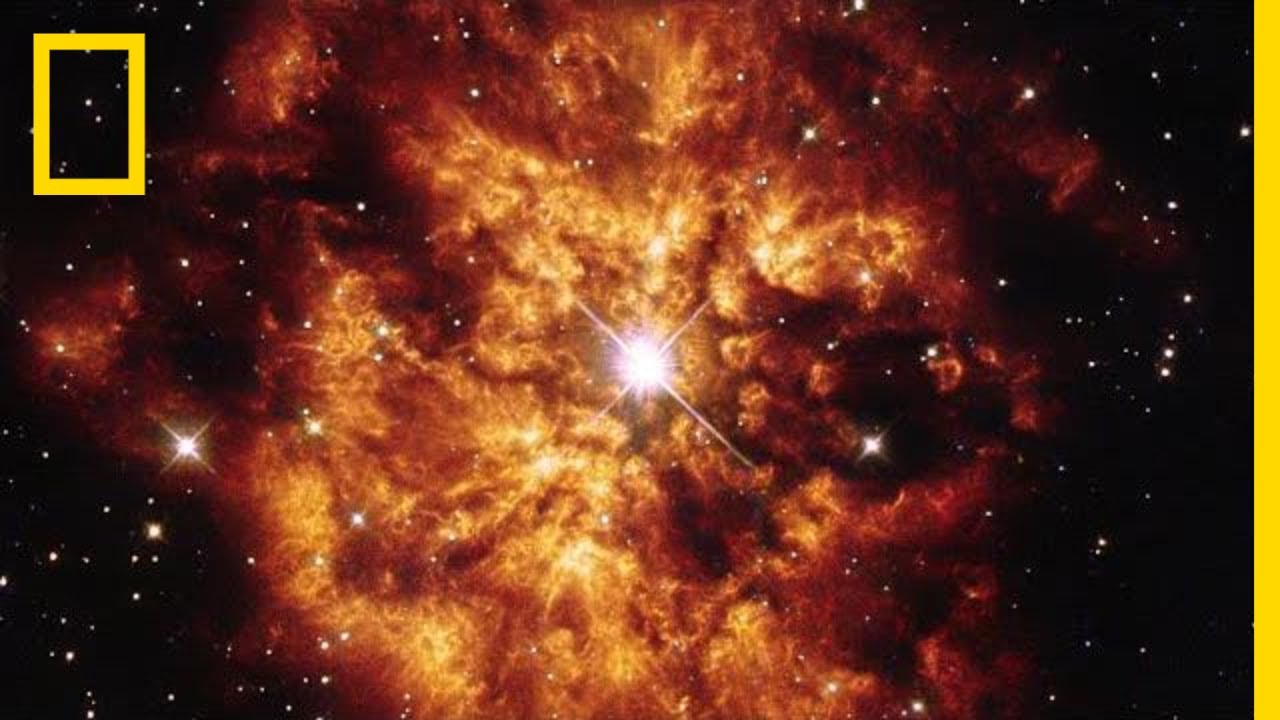
学習のポイントと概要
この動画では、夜空に輝く星の神秘的な世界を英語で学ぶことができます。星が星雲と呼ばれるチリやガスの雲の中でどのように生まれるのか、そして中心部での熱核融合によって光と熱を生み出す仕組みが解説されています。さらに、ブラックホールになったりする 壮大な最期についても触れられています。宇宙に散らばった星の残骸が、生命の素となる話も興味深いでしょう。ぜひ英語で聞いて、星について深く学んでみてください。
まずは、vocabularyを確認して動画の中でどこで言っているか聞き取ってみましょう!
vocabulary and phrase
| nebulae : 星雲 |
| hydrogen gas : 水素ガス |
| stellar nurseries : 星形成領域 |
| protostars : 原始星 |
| hydrogen nuclei : 水素原子核 |
| fuse : 融合する |
| thermonuclear fusion : 熱核融合 |
| spectral classes : スペクトル分類 |
| luminosity classes : 光度階級 |
| white dwarves : 白色矮星 |
| hypergiants : 超巨星 |
| stellar material : 星の物質 |
| supernova : 超新星 |
| neutron star : 中性子星 |
| mass : 質量 |
| collapse : 崩壊する |
| gravity : 重力 |
| remnants of stars : 星の残骸 |
| stardust : 星屑 |
LESSON VIDEO
sentence
Like fireflies on a still summer night, they gently dot and illuminate the infinite velveteen sky.
静かな夏の夜の蛍のように、星は無限の漆黒の空に優しく点在し、光を放ちます
Stars. Be they millions or billions of years old, are all born in Nebulae, clouds of dust and mostly hydrogen gas.
星は、数百万年であろうと数十億年であろうと、すべて星雲、つまり塵と主に水素ガスからなる雲の中で生まれます。
These stellar nurseries stars begin life as protostars, or hot cores formed by the collection and collapse of dust and gas.
これらの星形成領域の中で、星は塵とガスの集積と収縮によって形成される原始星、あるいは熱いコアとして生命を開始します。
As the protostars become hotter, hydrogen nuclei inside of the cores, begin to fuse and create helium.
原始星がより熱くなるにつれて、核内部の水素原子核が融合し始め、ヘリウムを生成します。
It is this chemical reaction, thermonuclear fusion that generates a star’s heat and energy and causes it to shine.
星の熱とエネルギーを生み出し、輝かせるのはこの化学反応熱核融合です。
Stars are categorized by a number of characteristics one of these classifications is by surface temperature called “spectral classes.”
星はいくつかの特性によって分類されますが、その分類の一つに表面温度によるもので、「スペクトル分類」と呼ばれます。
These seven major groups range from the coolest stars which are designated as M, and up to the hottest stars which are designated as O.
これら7つの主要なグループは、最も冷たい星であるM型から最も熱い星であるO型まで分類されます。
Stars are also classified by the amount of light they emit or luminosity, called “luminosity classes.”
星はまた、放出する光の量、すなわち光度によっても分類され、「光度階級」と呼ばれます。
These nine major groups range from the small less bright white dwarves, to the large and extremely bright hypergiants.
これらの主要な9つのグループは、小さく暗い白色矮星から、大きく非常に明るい極超巨星まで及びます。
But no matter their luminosity or surface temperature, all stars eventually burn through their hydrogen fuel and die out.
しかし、光度や表面温度に関わらず、すべての星は最終的に水素燃料を燃やし尽くして消滅します。
Less massive stars such as our sun, release their stellar material into space leaving behind a white dwarf surrounded by a planetary nebula.
私たちの太陽のような質量の小さい星は、星の物質を宇宙空間に放出し、惑星状星雲に囲まれた白色矮星を残します。
More massive stars instead blast matter into space and a bright supernova. Leaving behind an extremely dense body called a “neutron star.”
より質量の大きい星は代わりに、物質を宇宙空間へと爆発的に放出し、明るい超新星となります。そして、「中性子星」と呼ばれる非常に高密度の天体を残します。
But the most massive stars, stars that are at least three times our sun’s mass, collapse into themselves and create a bottomless well of gravity… a black hole.
しかし、最も質量の大きい星、つまり太陽の少なくとも3倍の質量を持つ星は、自ら崩壊して底なしの重力の井戸、つまりブラックホールを作り出します。
But from the remnants of stars heavier elements are cast into the universe, and it is this stardust that formed the seedlings of life itself.
しかし、より重い元素は星の残骸から宇宙へと放出され、この星屑こそが生命そのものの萌芽を形成したのです。
1番大きな星と小さな星
1番大きな星と小さな星を英語で見てみましょう。
UY Scuti
宇宙で最も大きいと知られている星は、現在UY Scutiだと考えられています。
Its radius is estimated to be about 1,700 times that of our Sun.(その半径は、私たちの太陽の約1700倍と推定されています。)
If UY Scuti were placed at the center of our solar system, its outer edge would extend beyond the orbit of Jupiter.(もしUY Scutiが太陽系の中心に置かれた場合、その外縁は木星の軌道を超えて広がります。)
EBLM J0555-57Ab
水素核融合をまだ行っている真の星として知られている最も小さい星は、EBLM J0555-57Abです。
It is a red dwarf star located about 600 light-years away.(それは約600光年離れた場所にある赤色矮星です。)
Its size is comparable to that of the planet Saturn, making it just large enough to sustain hydrogen fusion in its core.(その大きさは土星の惑星に匹敵し、核内で水素核融合を維持するのにぎりぎりの大きさです。)